

Didi wasn’t going anywhere, they said. I wasn’t so sure after my Bengal tripIt’s unbelievable for many that Mamata Banerjee, loved as Didi by supporters, has lost Bengal. Didi lost, so did many I know were confident of her win. I, however, wasn’t so sure after my Kolkata trip
“Didi’s not going anywhere.” For days before the results, conversations in my circle – in office, social gatherings, or over the phone – followed a predictable script. I, hesitantly, was going to put my money (no illegal betting here, JFYI) on the Bharatiya Janata Party (BJP), gauging the sentiments I captured during my recent visit to West Bengal’s Kolkata. Friends, editors, cab drivers, relatives, everyone seemed convinced that Bengal had already decided it was not letting anyone else into the state. “TMC is coming back comfortably,” they would say, with the confidence of people who had already fast-forwarded to the ending. And honestly, sitting in Kolkata’s cafes or scrolling through political chatter online, I was not confident enough to openly say I don’t agree with you. But reporting has a strange way of disturbing consensus.
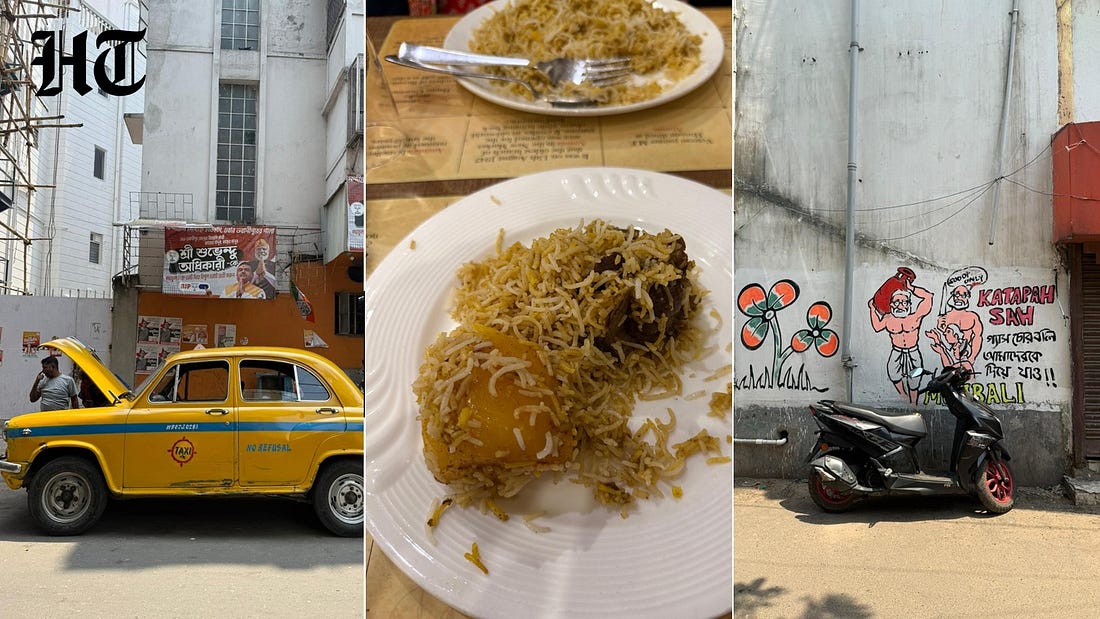
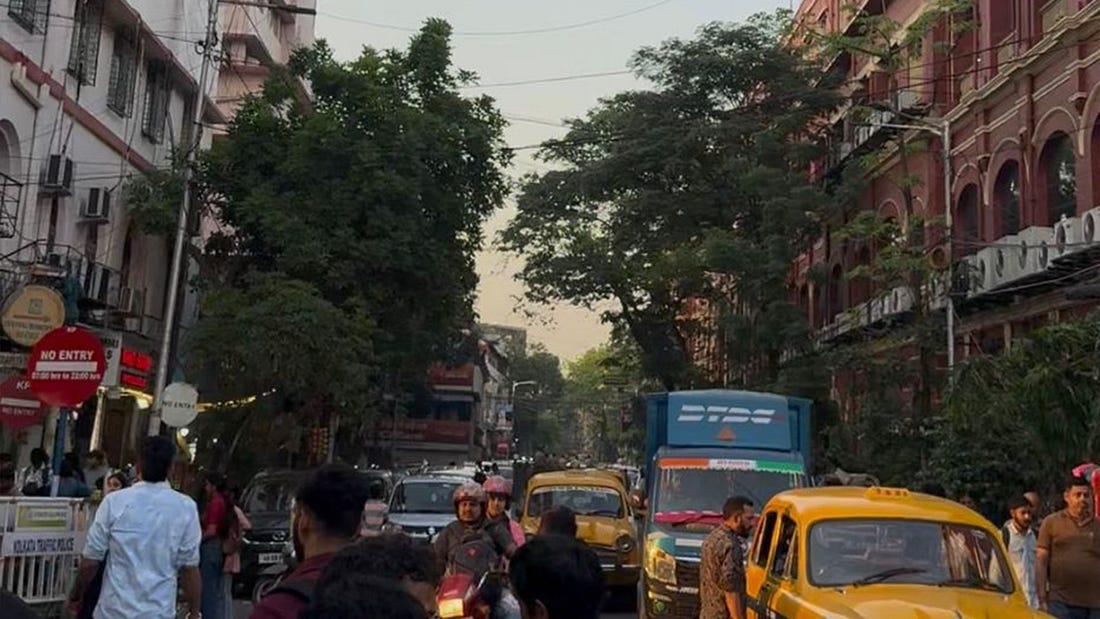
While the election narrative outside Bengal was loud, emotional, and often ideological, the Bengal I walked through felt quieter - almost cautious. From Gariahat’s markets to College Street’s addas, from Tangra’s Chinatown lanes to neighbourhood tea stalls, people rarely delivered dramatic political stands, but one thing was common — the wish for change. What kind of change - a new government or a different approach from the existing regime - no one explicitly said. Instead, conversations began with hesitation. Voices lowered. Opinions came wrapped in disclaimers: “Off camera bolchi… [telling off camera]”, “Change to chey che lokera [people are wanting a change].” That hesitation itself was telling. It is true many voters did not sound angry enough for a wave, yet they didn’t sound satisfied either. There was a clear fatigue with local power structures, with everyday frictions, with what several described as “pressure politics.” “People are done with tolabaji [cut money],” a BJP volunteer told me at the Bhabanipur office. Across parts of the city, the hush-hush atmosphere around political preference appeared, to me, to stem from a sense of fear. The hesitation was also visible in informal conversations I had during my travels. Several individuals said that openly naming political parties or expressing what they feel is the public mood could invite trouble, with some even suggesting they might have to “change addresses” if they spoke freely. Some spoke without hesitation when asked about the sense of “fear” - something that Prime Minister Narendra Modi also invoked in his victory speech on Monday. “Bengal is now fear-free.” “Kama ke khaane waale ko kaisa dar [one who eats what they earn has nothing to fear],” said Dinesh Kumar Singh, a taxi driver in Bhabanipur, when I inquired about the undercurrent.
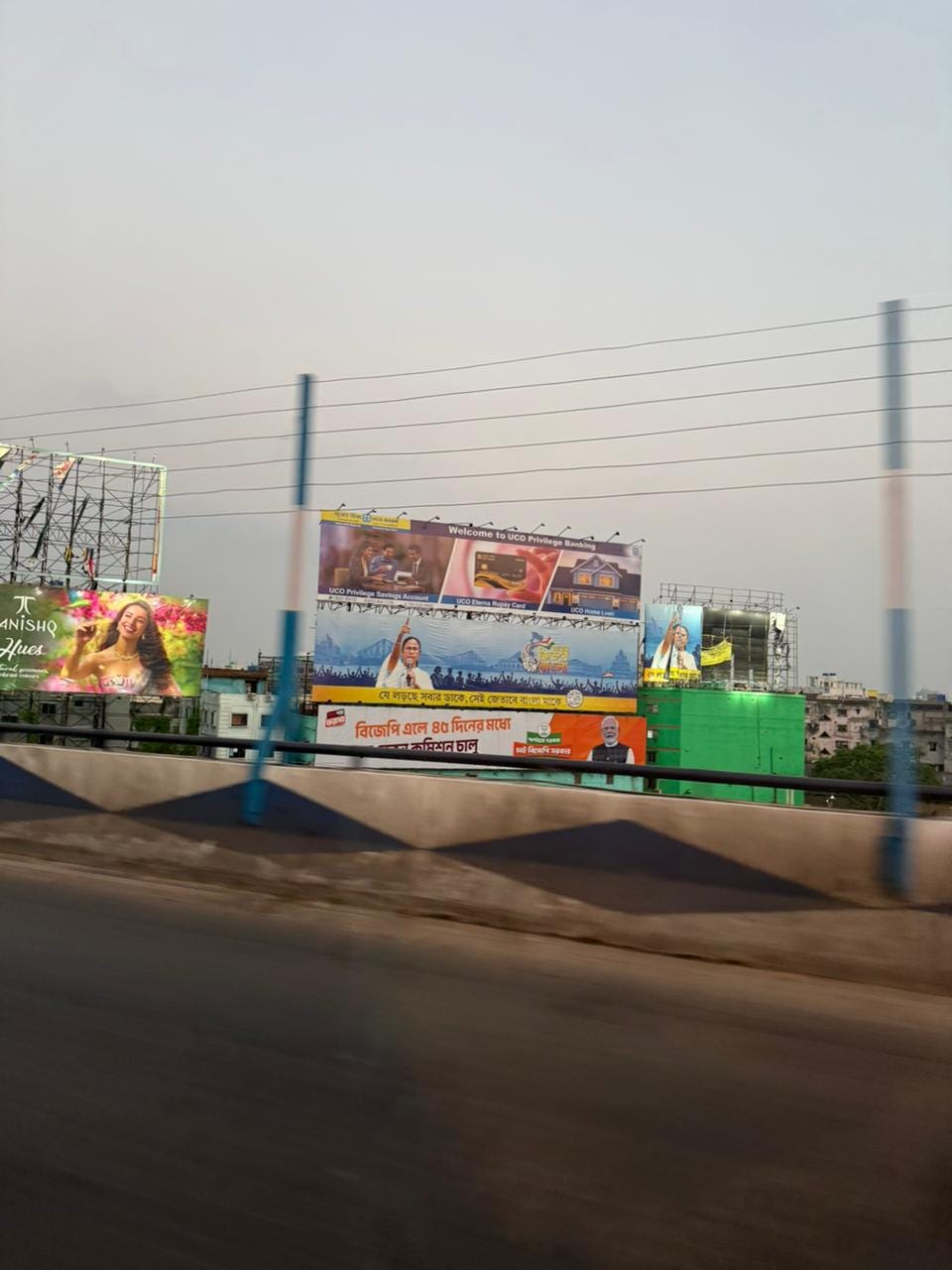
The complaints weren’t always ideological; they were personal, municipal, hyper-local. And repeatedly, I heard something journalists learn to recognise: voters signalling change without openly declaring it. Meanwhile, campaign optics told another tale. The BJP’s visibility, even though subtle and less saffron, delivered sharper messages. During one of my walks, a TMC poster featuring Mamata Banerjee was countered with a BJP poster that had Buddha in it, a symbol of peace.
Volunteers spoke less like outsiders and more like a party convinced it finally had organisational depth. “Aam naagrik ke upar inka jo pratarta hai uss se log pareshan ho chuke hain… oob gaye hain… inka syndicate raj ho, gundagardi ho, jabran vote lena ho… ye amooman log aapko kehte mil jayenge… ye Mamata Banerjee ka seat hone ke bawajood bhi hum log jab campaigning mein jaate hain tab log gharon se ahista nikal ke aake door se kehte hain hum log hain… jo log milte hain, local goons aake unko gaaliyan dete hain, maarte hain,” a BJP worker, Abhishek Shaw, said at the Bhabanipur office. “It’s absolute rubbish that BJP is an outsider party… Dr Syama Prasad Mukerjee is from Bengal… if at all, BJP is Bengal’s party more than anything else,” Shaw had added. Mukerjee founded the Bharatiya Jana Sangh in 1951, which is considered the ideological and organisational predecessor of the BJP. 
None of this guaranteed an outcome. Because firstly, it was just what some people in Kolkata thought and said, and Bengal is also beyond this city; and secondly, a Didi-less Bengal seemed almost unbelievable. And honestly, I was done with people in my close-knit circle thinking I knew the results just because I went to Bengal before the elections. No guys, it doesn’t work like that. 
Elections rarely follow neat field notes. But one thing my field assignment taught me is that reporting forces you to trust accumulated impressions — the pauses between answers, the body language during interviews, the things people say only after the camera is switched off. So while my circle confidently predicted continuity, my own instinct leaned toward disruption - a desperate demand for change. Not certainty, journalism rarely offers that, but a sense that the election was more competitive than the dominant narrative suggested. Results day, then, felt less like a surprise, at least to me, and more like confirmation of whispers heard across streets and neighbourhoods. “Right now, the estimates point toward a 202-seat win [for BJP],” a journalist from a news channel told me on April 13, in front of a residence where I interviewed BJP’s Bidhannagar candidate Sharadwat Mukherjee. This election was a reminder to me of why ground reporting still matters in an era of opinion panels and social media trends. Narratives formed far from polling booths can become echo chambers. The street, however, rarely lies for long. And perhaps that’s the real takeaway: elections are not won only in rallies or headlines, but in conversations over tea, in reluctant admissions, in everyday frustrations that slowly accumulate into political momentum. Sometimes the mood of a state reveals itself not through slogans, but through silence. This time, listening carefully made all the difference. 💪🏼 GROUND REPORTS◾️ ‘Sanatanis won’t harm you’: Bengal BJP leader’s messages for those who wear skullcaps, sell meat ◾️ Maach, maangsho and the BJP: Is TMC’s non-veg claim spooking Bengal? A ground report ◾️ Through Chitto Da’s Dokan: How Kolkata is talking about Bengal elections in addas OTHER HT ELECTION SPECIALS◾️ What May 4 verdict means for key leaders — Modi, Shah, Mamata, Rahul, Stalin, Himanta ◾️ What swung the votes in Bengal, Tamil Nadu, Kerala and Assam ◾️ How ‘Thalapathy’ Vijay, eyeing Tamil Nadu chief minister post, turned the tide after Karur stampede Thanks for reading! Subscribe to HT Newsletters to receive new posts.
|








0 टिप्पणियाँ: