Hello!
“I am first and foremost a scientist. My goal is to understand nature. But doing science is, sort of, like reading the mind of God. Understanding the deep mystery of the universe is my religion, kind of.” The words of Sir Demis Hassabis, Chief Scientist of Alphabet, Chairman of Google DeepMind, CEO and co-founder of Isomorphic Labs, and a UK Government AI Adviser. He was knighted in March 2024, for his services to artificial intelligence (AI). This line (from the introduction) stays with me through the book, and for good reason. This approach has defined the very path to AI that sets Google DeepMind apart from all its competitors. While competitors chased daily active users to justify funding, Google DeepMind sought out a relevant intersection of AI and science. While others engaged in all sorts of antics to remain in the news, Google DeepMind silently built AI for medicine and agriculture. And so on.
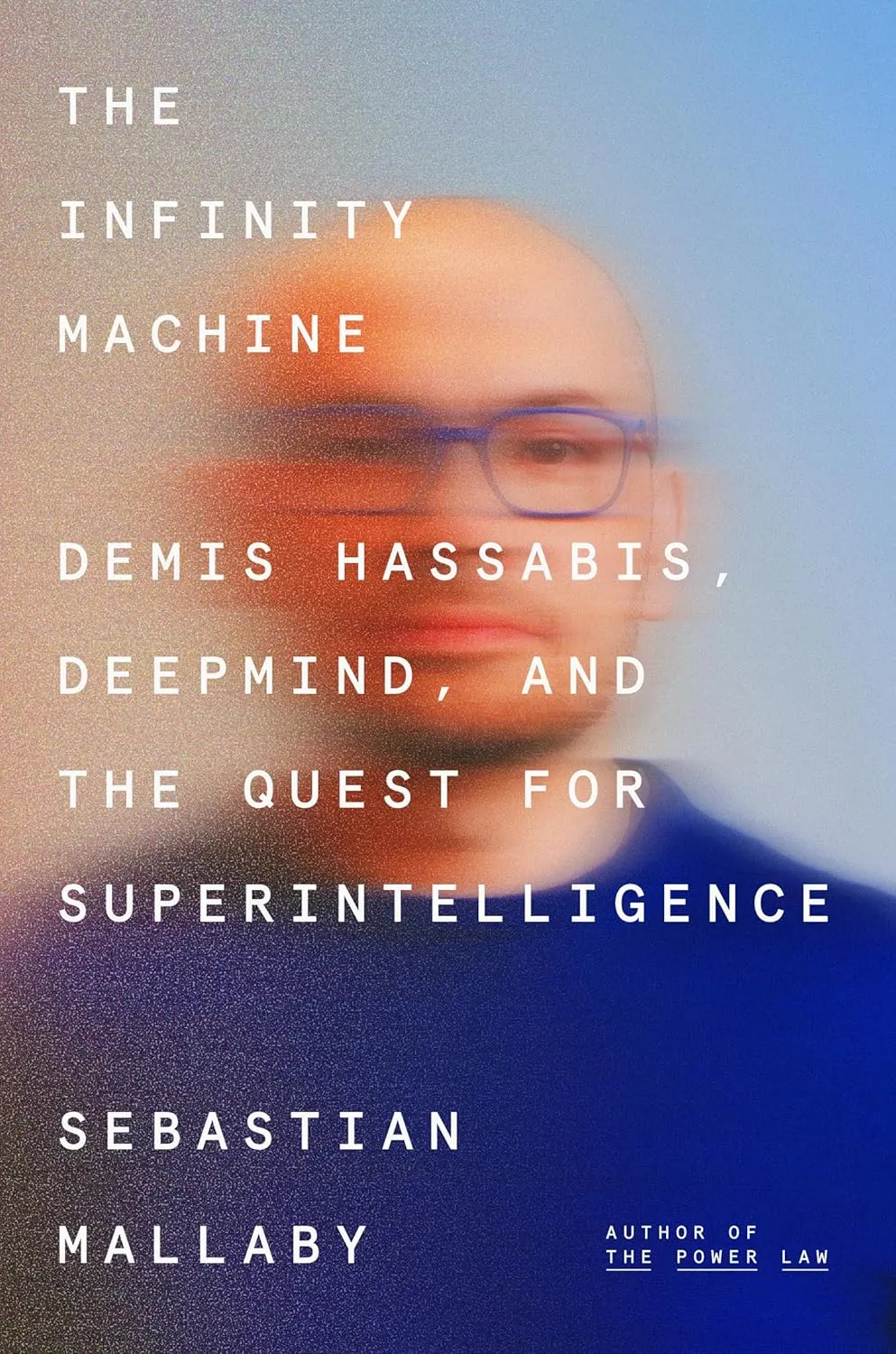
Rarely do we ever see this sort of thriller-esque pace underline a scientific biography that has the essential intellectual rigour. The Infinity Machine: Demis Hassabis, DeepMind, and the Quest for Superintelligence (Penguin Allen Lane; March 2026) is also simply another biography, for it pieces together the life of the most special one amongst all supposedly visionary AI leaders, tackles the very subject of perhaps the most consequential technology of our time, and the portrait of someone who is still working backwards to find an answer to a question that’s perplexed everyone—how far and how much can we build intelligence?
There may well be a balanced element of luck and brilliance. In the chapter “Get Google”, Sir Demis explains how he struggled to persuade the Founders Fund that DeepMind would end up changing a lot about the world. “I was fed up with scrambling around, trying to justify what I knew was the biggest thing of all time,” Hassabis recalled, adding, “I just thought, look, I’ll go to Google. I’ll get a shitload of computers and then I’ll solve intelligence.” The brilliance of the man. In the fall of 2013, DeepMind and Google began discussions about a potential acquisition. The rest, as they say, is history.
The book tracks Hassabis’s meteoric rise from a working-class North London family of a Chinese Singaporean mother and a Greek Cypriot father, a chess prodigy to a video game pioneer, Cambridge computer science graduate, and cognitive neuroscientist. The author, Sebastian Mallaby, explains Sir Demis’s philosophy that avoided chasing a rigid, rules-based logic of early “symbolic AI,” and instead taking a more complex yet intuitive approach of deep reinforcement learning. By making machines that observe to learn much like the human brain, DeepMind’s breathtaking breakthroughs include defeating the world champion at the game of Go with AlphaGo, to mapping the entire universe of proteins with the Nobel Prize-winning AlphaFold.
“Great! If he thinks it’s impossible, it should be pretty impressive if we do it,” the author recollects Sir Demis’ reaction to Sergey Brin’s skepticism about cracking Go. There’s motivation, and then there’s this chapter in history.


0 टिप्पणियाँ: