
Lots of canon fodder, too few canon makersCreating a legacy of excellence in any art form comes with its own ideological blind spots, but perhaps there is a tiny case to be made for making a canon of Indian films after all.
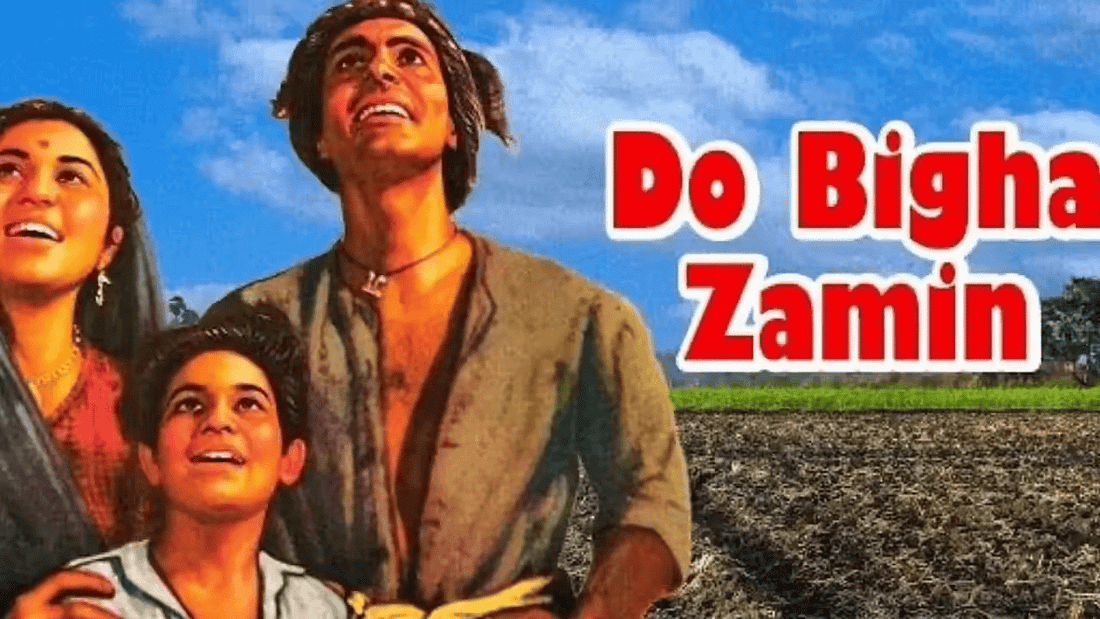
As Oscar fever catches on—do you still have it in you to wake up at 4:30 am on 16 March, turn on the telly, and sip coffee to remove the bleary?—it bears recollection that India’s official entry didn’t make it to the nominee list for Best International Feature Film 2026. Last week, I caught up with the newly-appointed Mumbai Academy of Moving Image (MAMI) film director Shivendra Singh Dungarpur to speak about the canon and Indian films. Dungarpur is the founder of the Film Heritage Foundation, which, since 2014, locates, restores and showcases Indian films from around the world. The Foundation has partnered with Martin Scorsese’s Film Foundation to restore Uday Shankar’s Kalpana (1948), Govindan Aravindan’s Kummatty (1979) and Aribam Syam Sharma’s Imagi Ningthem (1982), among others, and worked with Cineteca di Bologna’s state-of-the-art restoration laboratory to bring the hardened reels of old films like Mogacho Aunddo, the first Konkani film made in 1950, back to life. At present, the Foundation is also working on restoring Bimal Roy’s films—they showed a restored print of the 1953 classic Do Bigha Zamin at last year’s Venice Film Festival.
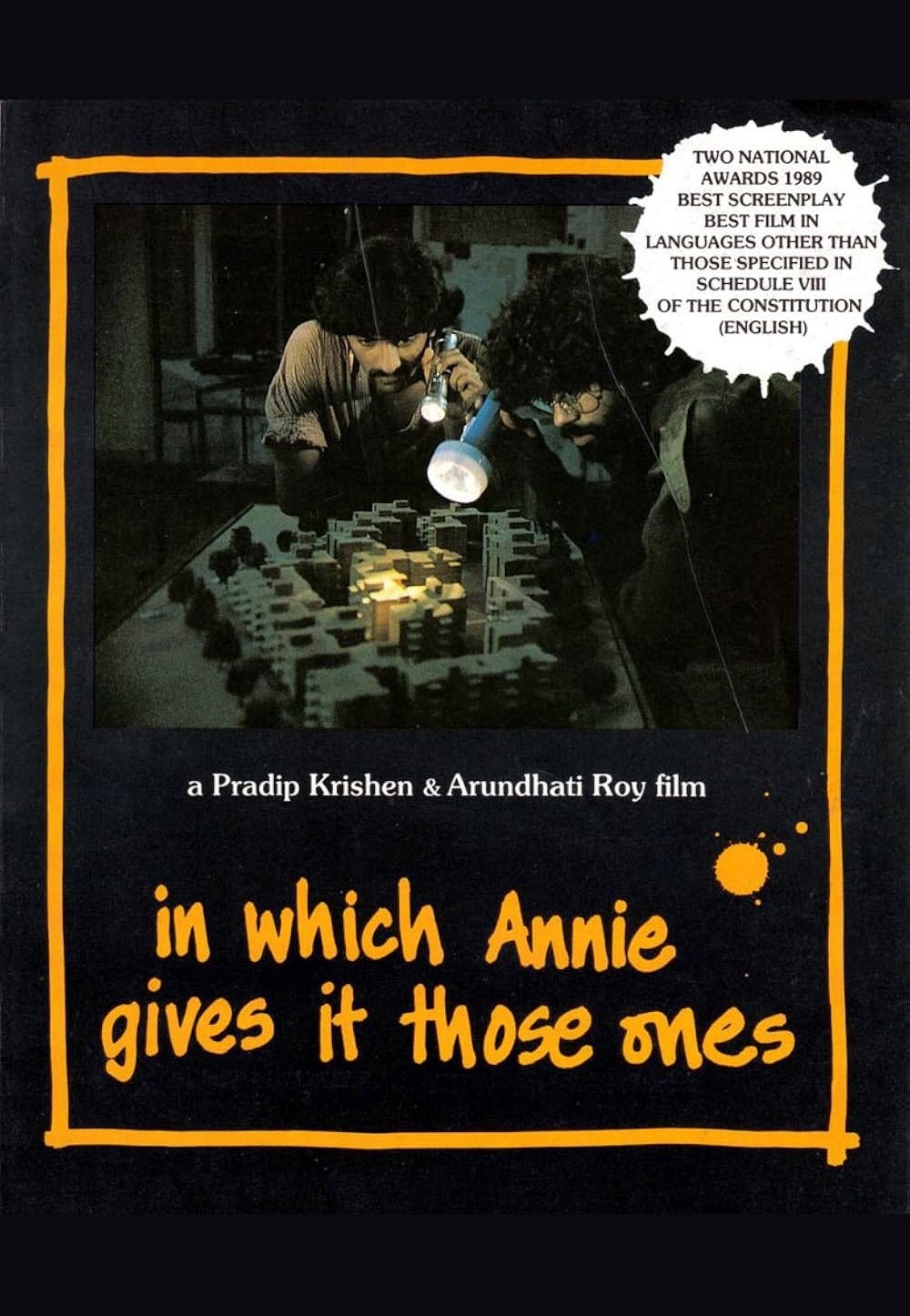
It wouldn’t be incorrect to say that Dungarpur is passionate about Indian cinematic offerings. He spoke about watching Pakeezah as a child in a theatre in Patna, with his grandmother Usha Rani—a member of an erstwhile royal family. The joy of watching film reels unfurl on a big screen still leaves him in awe, he said, with his eyes lighting up. His offices in Tardeo, Mumbai, are filled with memorabilia and posters of obscure films from around the world. His new office coming up in Ballard Estate will serve as a sort of museum to cinema, he told me. But Dungarpur is also invested in creating a canon—and perhaps that is what is needed for films like Homebound to have a fighting chance at the Academy Awards. We need to teach the West how to see us. For, the stats are bleak. Ever since the category was instituted in 1956, only three Indian films have made it to the nomination list of the Best International Feature Film (earlier called Best Foreign Language Film), though India has consistently submitted films each year barring a few. Making a canon is no easy job. Dungarpur needs these films to be viewed. For the past year, Mumbai’s Regal Cinema routinely offers a dense programme of screenings, ranging from the cult to the popular to the esoteric. Last year, he organised a retrospective of Wim Wenders’s films across six cities in collaboration with the German auteur’s foundation and the Goethe-Institut Max Mueller Bhavan. This year, he was invited to be one of the members of the International Jury of the Berlinale for the “incredible work that the foundation has done to rescue classics of Indian cinema” as festival director Tricia Tuttle said when introducing the jury members to the press. Separately, his foundation showcased a restored 4K version of Pradip Kishen’s In Which Annie Gives it Those Ones (written by Arundhati Roy), in the festival’s classics section. The film was also released across a limited number of theatres across Delhi and Mumbai this weekend. “I want the new audience, the young people, to be able to see [these films]. Many of these films speak a universal language, and [have] a way of looking at life. It’s where true India lies. We made a conscious effort to restore films across different languages: Imagi Ninthan is a Manipuri film, Maya Miriga by Nirad Mohapatra is one of the most important Odia films, Ghatashraddha by Girish Kasaravalli and [the 1970] Samskara, of which there is only one print left, are Kanadda films. They are the most important films from India.” To be sure, any kind of nomination at the Oscars requires lobbying—Scorsese held a series of viewings of Homebound in Los Angeles, and invited Neeraj Ghaywan for a sitdown conversation before an audience in New York late last year—and in recent times, we have even seen vicious smear campaigns break out just before voting commences. Remember what happened with Emilia Pérez star Karla Sofía Gascón, who was the first openly trans actor to be nominated for a Best Actress award at last year’s Oscars? Gascón‘s old tweets carrying offensive opinions about certain identities went viral in the days leading up to the jury making a decision. Canon is as canon does. Still, a decolonised view of any canon, literary, cinematic, or artistic must take into account the ideological imperatives that drive the selection of what fits and what doesn’t. It also requires a frank assessment of the constructed nature of canons. Meanwhile in Delhi, the Habitat International Film Festival 2026 began on Friday and will continue to 22 March. Vidyun Singh, Creative Head Programming, told me that the focus country of Hungary lies in large part due to its rich cinematic history that spans over 130 years. (Contrast that to the fact that of the first 1,700 films to be made in India, all silent, black-and-white moving pictures, only five complete prints remain.) “Hungarian cinema draws strength from a shared cultural conversation,” Singh said. The programme reflects that featuring contemporary award-winning films alongside two retrospective segments that honour Hungary’s post-war filmmakers, István Szabó and Zoltán Fábri. The Polish Institute in Delhi is also using this opportunity to showcase a retrospective of Andrzej Wajda’s works, on the occasion of the birth centenary of one of the country’s most well-known auteurs. “India’s equivalent strength lies in its linguistic diversity. The art-house tradition—from Bengal to Kerala to Karnataka—is already extraordinarily rich. India already possesses one of the world’s deepest art-house traditions. What remains is to weave it more consciously into the story we tell about Indian cinema, so that the lineage from Ritwik Ghatak to contemporary filmmakers feels like an ongoing conversation rather than a parallel universe,” Singh said. India’s prodigious output should give any curator cause to celebrate the possibility of canon creation. Instead, it presents an uphill task. Here are three works of art that blew me away this week: Parvathi Nayar is back. The Chennai-based artist is showing her first solo in 20 years in Mumbai at Gallery Muziris. Through a series of black-and-white graphite drawings, Parvathi explores the spaces we inhabit through the lens of science, technology, and environmental consciousness. The microscopic becomes the subject of macro musings.
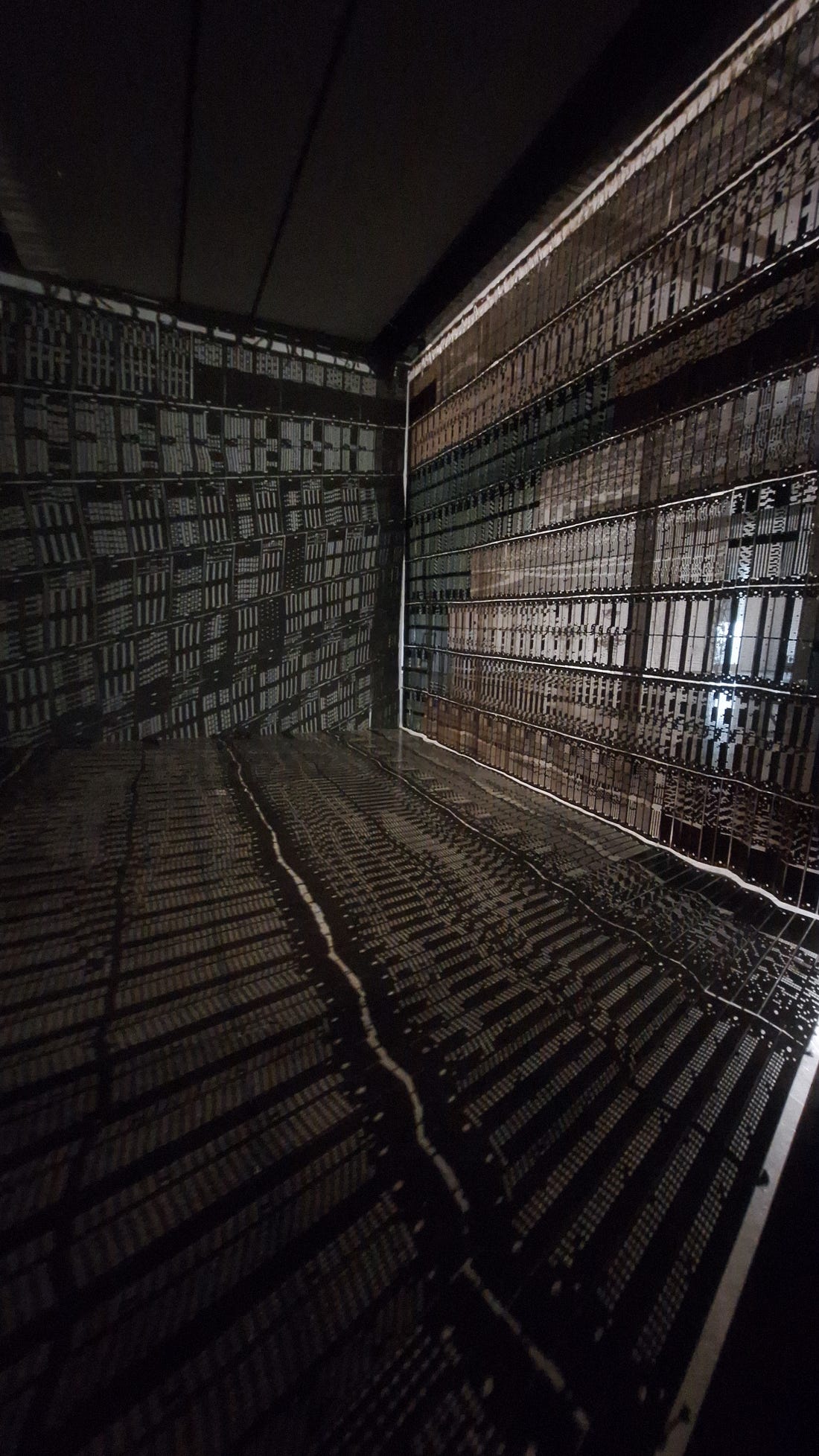
Archana Hande’s works in exhibition The Last Rust was born out of her visits to Gujari bazaars that operate as nomadic Sunday flea markets traveling all over India. The market is a hub for the scrap discarded even by main-street sellers, creating a second life for this now third-hand material. A remarkable installation made in the style of a jacquard loom using discarded punch cards creates an intricate pattern using light instead of thread at art gallery Chemould Prescott Road in Mumbai.
Gurcharan Singh’s canvases in AstaGuru’s first edition of Showkeen in the national capital—an exhibition of modern and contemporary artists—brings a mass of faces to your attention. Outcasts, the poor, pimps in sleazy alleyways, the insides of hotels, rich dancing women in pearls jostle for space on Singh’s canvases, and you find yourself unable to look away from the somewhat vacant mostly watchful eyes of the people looking back at you.
Dhamini Ratnam is culture editor at Hindustan Times. Ways of Seeing is her weekly newsletter that takes you through only the most important cultural happenings you need to know of. You can write to her at dhamini.ratnam@htlive.com or comment on this newsletter below. Edited by Dhrubo Jyoti. Produced by Tushar Deep Singh.Thanks for reading Ways of Seeing! Subscribe for free to receive new posts and support my work.
|
शनिवार, 14 मार्च 2026






0 टिप्पणियाँ: