
🧠 Neural Dispatch: China’s tough AI rulebook, and Instagram CEO wants cameras to prove you’re realThe biggest AI developments, decoded. 7 January 2026.
Hello! Cognitive warmup. I’ve said it time and again that the memory shortage is going to be bad news for the PC market, and you will be spending a lot more for your next PC purchase in 2026 (perhaps even later too). Don’t believe me, but believe the latest report from the International Data Corporation (IDC) which suggests PC shipments could shrink by up to 8.9% in 2026 because of the high cost of memory. That is a massive number. It’s also ironic that many of the PCs being sold today are “AI PCs”, while AI elsewhere has gobbled up the memory chip supply, leaving PCs and other electronics categories, with little to work with. The IDC says the average selling price of a smartphone could grow by 6% to 8% in its most pessimistic scenario. There you go. I’m sure AI is great. ALGORITHM A change in the year doesn’t mean old, incomplete chapters mustn’t be written and completed. This week, we discuss:
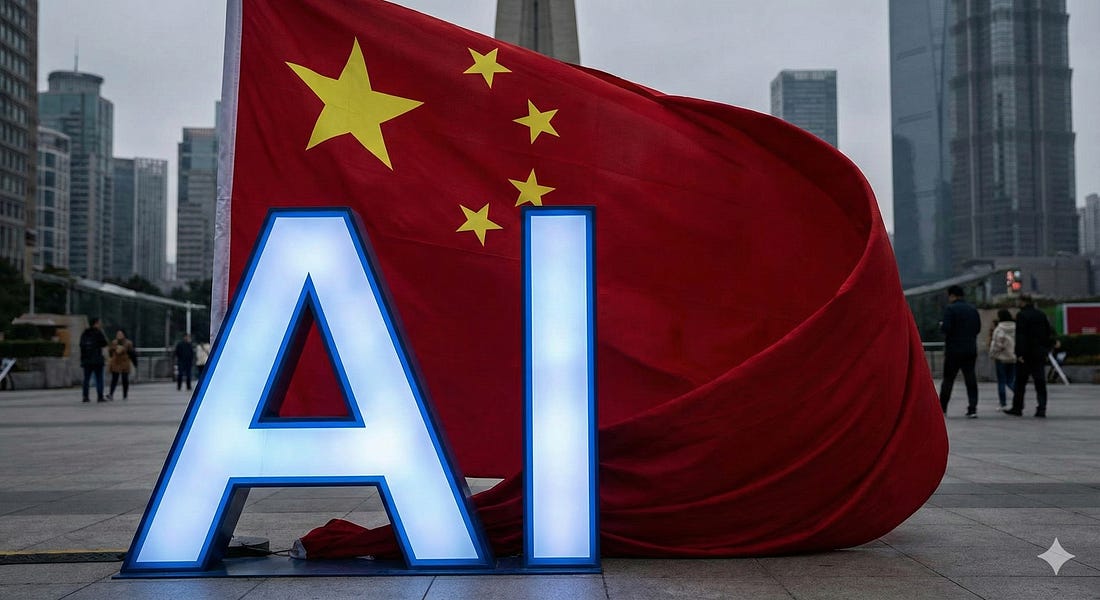
Make, of all that, what you will. China drafts world’s toughest AI rulesChina’s Cyberspace Administration has proposed a set of draft rules that, if enacted, would instantly rank among the strictest AI regulations anywhere. And I don’t think any one of us would complain, if the leash is tightened to bring some discipline and actual guardrails into the space.
They await finalisation, but these proposals go far beyond model safety checklists, and instantly bring all AI products that are available in the Chinese market, within its ambit. That is, any AI product that works with text, images, audio, video, and other mediums to replicate conversation. Minors and elderly users would need to register a guardian to use AI services, and that guardian would be notified if sensitive topics, such as suicide, figure in conversations. AI systems would also be explicitly barred from emotional manipulation, as well as promoting violence, crime, or self-harm. This is regulation of not just models, but also relationships between humans and machines. The Chinese method could well dictate where the European Union and the United States head with their AI regulation conundrum. China is clearly drawing hard lines around psychological impact and social stability, with the largely unchecked introduction of AI at this scale, into the society. Whether these rules meaningfully prevent harm, or simply push usage into the darker corners, remains to be seen. Thanks for reading Neural Dispatch! Subscribe for free to receive new posts and support my work. OpenAI adds a ‘Head of Preparedness’ job, for humansAn AI company that keeps telling enterprises worldwide to replace humans with their algorithms, is looking to hire a human as “Head of Preparedness”. I just want to keep repeating this designation, and so I shall. The Head of Preparedness will be responsible for issues around mental health, cybersecurity, and runaway AI. The title, ummmm…Head of Preparedness…itself is telling. This isn’t product safety or policy compliance but as clear a signal as there will ever be that OpenAI sees its models as potentially systemic actors capable of affecting individuals, institutions, and infrastructure at scale. Little surprise, then, that AI chatbots in general have been in legal crosshairs around several high-profile cases where they supposedly drove teens to death by suicide. It’s also an implicit admission that guardrails and self-regulation (I love that term; as useless as a Formula E car trying to race a Boeing 777-300ER) alone aren’t enough. As models claim to be more autonomous and agentic, preparedness becomes less about reacting to incidents and more about anticipating failure modes before they materialise. The open question is whether this “Head of Preparedness” role carries real authority, or remains advisory so as to not impede commercial momentum? Meta has, surprise surprise, splurged some moreMeta Platforms and Mark Zuckerberg’s AI spending spree had one last addition to the list in 2025, the acquisition of Manus, a startup focused on building general-purpose AI agents designed to turn “advanced AI capabilities into scalable, reliable systems” that can supposedly perform end-to-end work in real-world settings.
Is this Meta now betting that agents, not mere chatbots, are the next competitive frontier? Take that with a pinch of salt (cough, metaverse, cough). Manus already offers subscription products, and plans to expand them to the businesses and users on Meta’s platforms. That ambition, however, still runs ahead of reality. The industry remains stuck in a familiar gap between agent hype and agent reliability. Meta is clearly betting that scale, distribution, and the early mover advantage will eventually close that gap. In the real world, today’s agents remain far better at demos than dependable execution. THINKING
Just as we headed into 2026, someone from the world of technology simply had to say something that’d leave you scratching your head. Instagram top executive Adam Mosseri it is, this time around, saying photographers and basically any human out there posting on social media, should now go for the “raw aesthetic”, to stand out as real content in a world where “AI makes polish cheap, phone cameras have made professional-looking imagery ubiquitous—both trends cheapen the aesthetic”. Make of it what you will, but I’ll anyway go ahead and tell you what I think of it. The Context: This is Instagram, one of the largest social media networks out there, pretty much waving the white flag in terms of identifying AI generated content and separating it from actual images, videos, artwork or anything else that’s created by a human. They are saying they can’t do it anymore, and we’re on our own. Perhaps we’re doing content posting all wrong, by going for polish and refinement. But since it’s the world of tech, and everything centres on valuations, they don’t say it in as many words. In reality, the idea of reliably spotting fake or generated content is breaking down. Mosseri’s argument flips the problem on its head — instead of endlessly chasing better detection of synthetic media, platforms may find it easier to authenticate real media at the moment of capture, if users were also to do a bit worse in some ways. Secondly, he’s laying the onus on camera companies (and that includes smartphone cameras). First, by saying that camera companies are betting on the wrong aesthetic by competing to make everyone look like a professional photographer and secondly, that cryptographic signatures embedded by cameras could establish a verifiable chain of custody from lens to screen. A Reality Check: Often, absurdity has logic that is sound, before you get to the finer details. Does Mosseri want every hardware player in the photography space to play ball and add what he’s asking for every photograph or video captured? Secondly, has he thought about the risks of a two-tier internet system, where unsigned content is treated as suspect by default? Even though it may be real? All I hear from Mosseri’s framing in that long winded post is, an acknowledgement of the hard truth that as AI spreads its footprint, it becomes harder to tame. The future of trust online may depend on proving authenticity before doubt sets in, and that’s a slippery slope from which there really is no coming back. Neural Dispatch is your weekly guide to the rapidly evolving landscape of artificial intelligence. Each edition delivers curated insights on breakthrough technologies, practical applications, and strategic implications shaping our digital future. Written and edited by Vishal Mathur. Produced by Tushar Deep Singh.Thanks for reading Neural Dispatch! Subscribe for free to receive new posts and support my work.
|
मंगलवार, 6 जनवरी 2026









0 टिप्पणियाँ: