

A matter of life and exit: The escape route that can save you in case of a fireWhen a fire breaks out, every second matters. Yet in many buildings, escape routes are obstructed by bicycles, cartons and furniture, turning a critical lifeline into a potential hazard
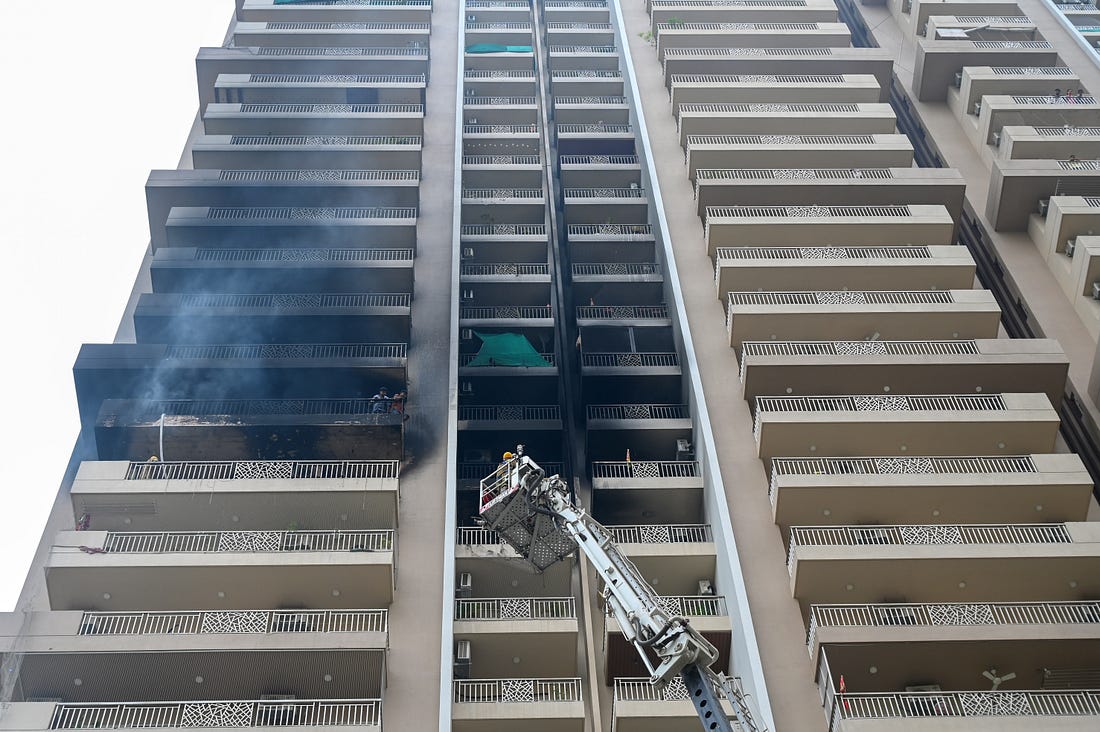
Two major fire incidents in the National Capital Region this week have once again raised a critical question: If a fire breaks out, can residents get out safely? In Delhi, a devastating blaze at a bed-and-breakfast hotel in Malviya Nagar claimed 21 lives. Preliminary reports have pointed to familiar concerns, alleged safety violations, overcrowding, blocked escape routes, unauthorised alterations and delays in evacuation. Just hours later, a fire in a 12th-floor apartment of a high-rise residential society in Noida’s Sector 75 forced the evacuation of residents after a family became trapped inside. Fire officials said the blaze was caused by a short circuit in an air conditioner. Despite their different causes, the two incidents highlighted a common concern: the need for clear, unhindered emergency exits that can be used quickly during a crisis. How is the number of exits in a building decided?Under the recently revised National Building Construction Standards (NBCS) 2026, the number of exits required in a building depends on three factors: occupant load, floor area, and building use, according to fire experts. The code follows the concept of a ‘unit of exit,’ with a minimum unit width of 500 mm. As the number of occupants increases, buildings must provide wider exits and, in many cases, additional exit routes, experts say. As a basic rule, any space accommodating more than 50 people must have at least two exits. However, the requirement increases for larger or more complex buildings. A large commercial floor spread across 100,000 sq ft may require four or more exits, while a high-rise residential building with a large number of apartments may need multiple staircases to ensure safe evacuation, they explain. Why exit placement mattersThe location of exits can be just as important as the number of exits. Building codes specify maximum travel distances to ensure occupants can reach safety quickly. Exits are typically positioned in different directions so that if one route becomes inaccessible due to fire or smoke, another remains available. For residents, the simplest safety check is this: Can you identify at least two unobstructed escape routes from your floor? If not, it may be time to raise the issue with your building management. An exit is useful only if you can access it in case of a fireFire experts caution that compliance on paper is not enough. In several fire investigations across the country, emergency exits have been found locked, blocked or converted into storage areas. During an emergency, such obstructions can cost precious minutes and lives. Exit corridors, staircases and access routes should never be used for storing bicycles, furniture, cartons, construction material or household belongings. Final exits leading outdoors must remain unlocked and accessible at all times. High-rise buildings need more than one staircaseIn high-rise buildings, two staircases—a main staircase and an emergency staircase—are generally mandatory. Depending on the building’s size and occupancy, additional exits may also be required, say experts. But modern fire safety extends beyond staircases. One of the most critical features is staircase pressurisation. During a fire, specially designed fans maintain positive air pressure inside stairwells, preventing smoke from entering evacuation routes. This allows occupants to descend safely even when smoke affects other parts of the building. Other essential safeguards include compartmentation systems, fire-rated walls, smoke detectors, sprinkler systems and smoke-control mechanisms that help contain the spread of fire and toxic fumes, say experts.
What can residents do?Fire safety begins at home. Air conditioners, a common source of electrical fires during summer, should be serviced annually and ideally before the start of the peak season. Maintaining a moderate temperature setting, around 24°C, can also reduce strain on electrical systems. Residents should also ensure that fire extinguishers in common areas and within apartments are properly maintained and easily accessible. Equally important is knowing how to use them. Experts recommend that resident welfare associations conduct regular fire-safety audits to identify deficiencies in firefighting equipment, electrical installations and emergency preparedness systems. Smoke detectors and sprinkler systems should be periodically inspected, particularly after renovation work that may damage or disable them. The most important safety measure? Stay alertBuilding codes, fire exits and safety systems form the first line of defence. But awareness remains the most effective protection. Know your escape routes. Check whether staircases are obstructed. Participate in fire drills if they are conducted. Report safety violations when you spot them. Because when a fire breaks out, preparation often makes the difference between a close call and a catastrophe. Thanks for reading! Subscribe for free to receive new posts and support my work.
|







0 टिप्पणियाँ: